
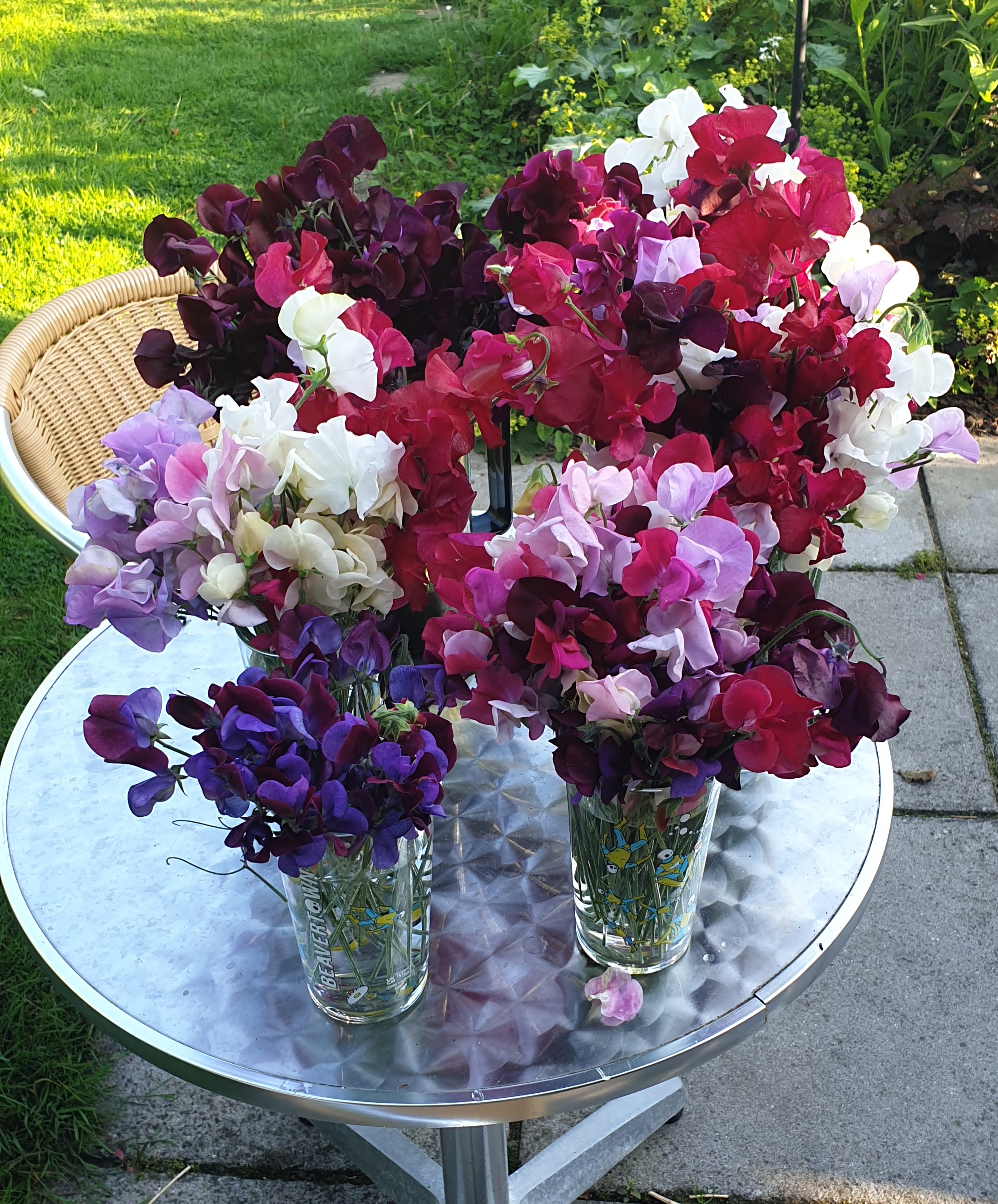
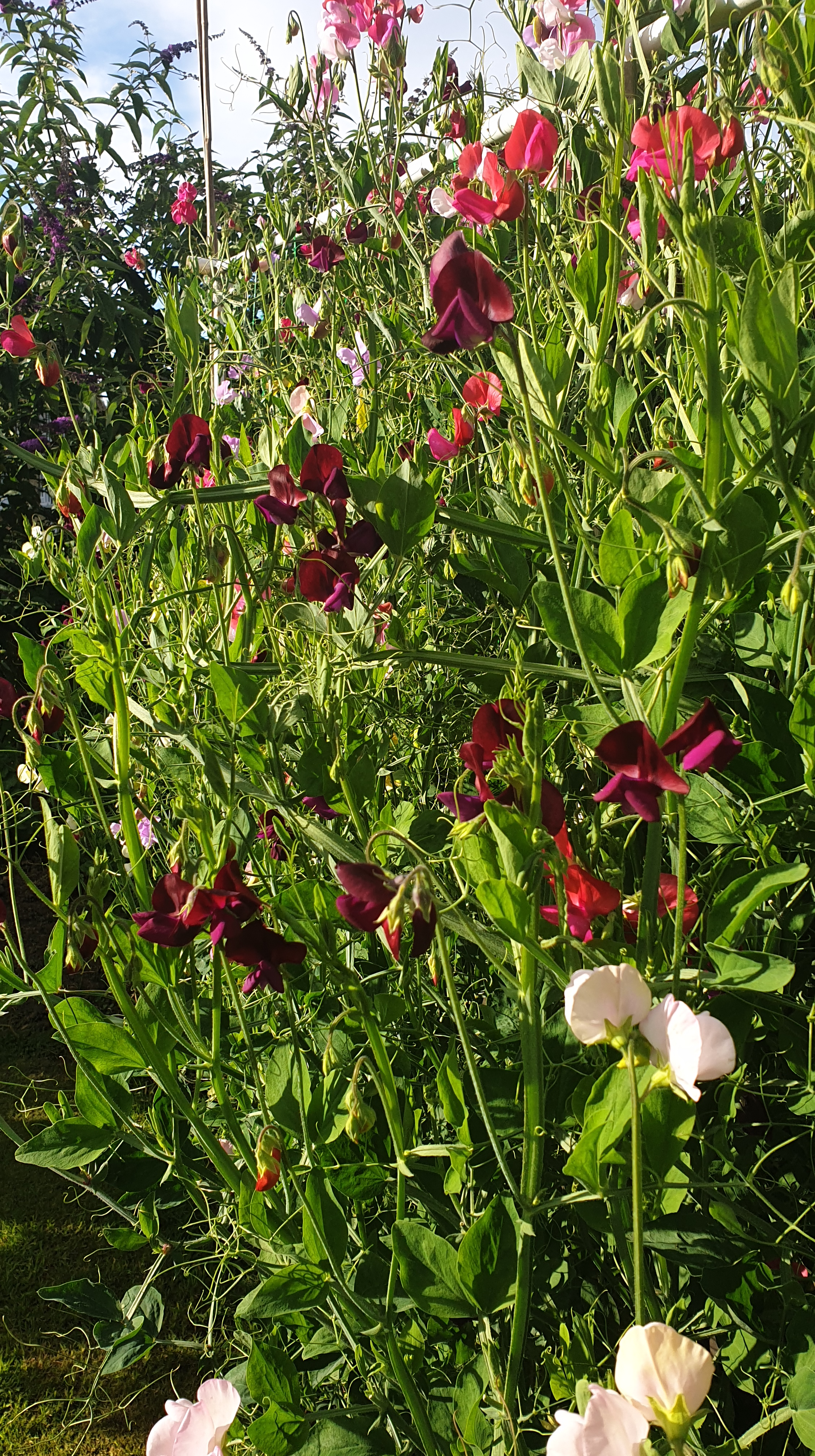
We are coming to the end of sweet peas in the garden. They are, to me, a bellwether flower. Every gardener seems to grow them and anyone who sees ours in the bookshop feels compelled to comment on them, before adding a self-assessment of their own sweet peas; as if the growing of sweet peas is an indicator of one’s horticultural credentials.
When I think of sweet peas, I think of my mother. Throughout the summer she would provide bunches to take away whenever we stayed and when, after she died, I started growing them myself it seemed apt that the first flower seemed always to appear on her birthday – 10th July.
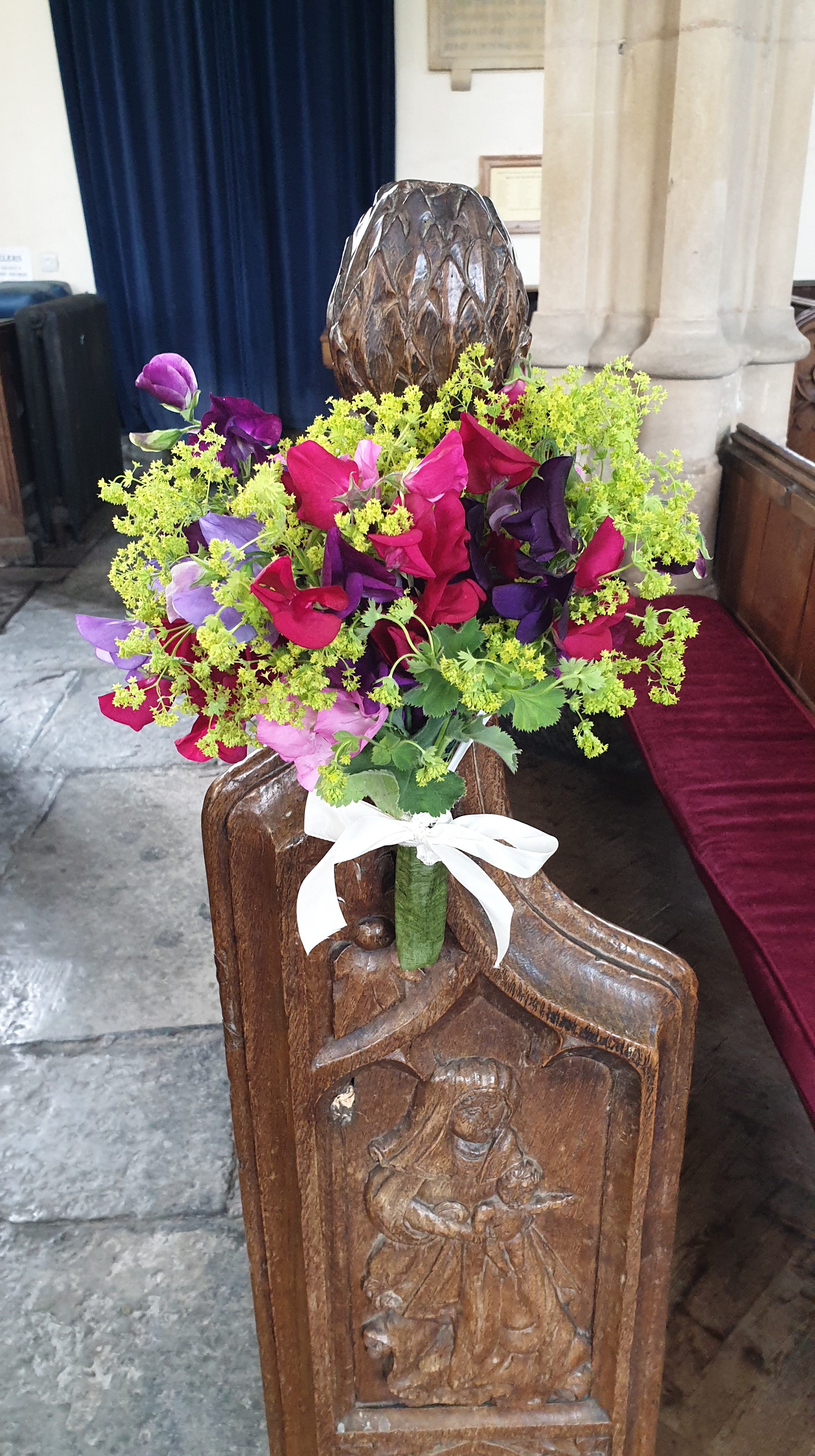
Over time, we have managed to bring forward the sweet pea season, but when we were tasked with supplying flowers for “The Wedding of the Year”, on 13th July, I knew we would have to bring our A-game to make sure Verity was not walking up the aisle with just a single sweet pea in her bouquet.
Planning was essential, with seeds bought as early as August last year, and sown in November. Germination was good, but by January the ranks had been decimated by damping off. But, as we had sown enough to sink a Russian battleship, the remaining plants ensured we were still in with a fighting chance of producing enough flowers for the summer.
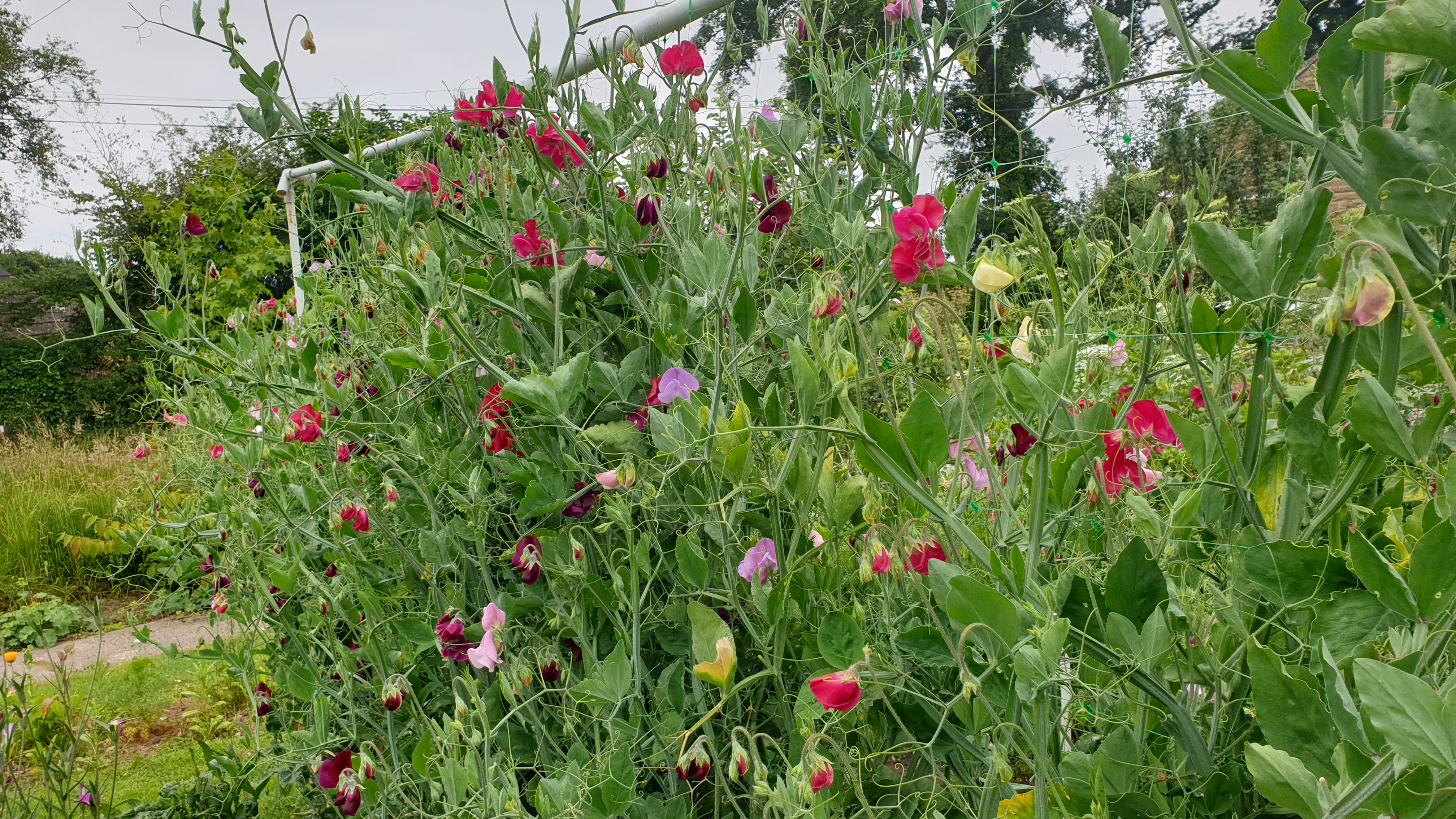
By March they were bursting out of their pots and storage containers and needed more room outside of the greenhouse. I used to think that Sweet Peas are not hardy, but they can survive anything down to -4C, so we took a low risk gamble and planted them out. Despite the wet weather, the first flower appeared on 5th May and by July they were in full bloom, so the job was a good ‘un.
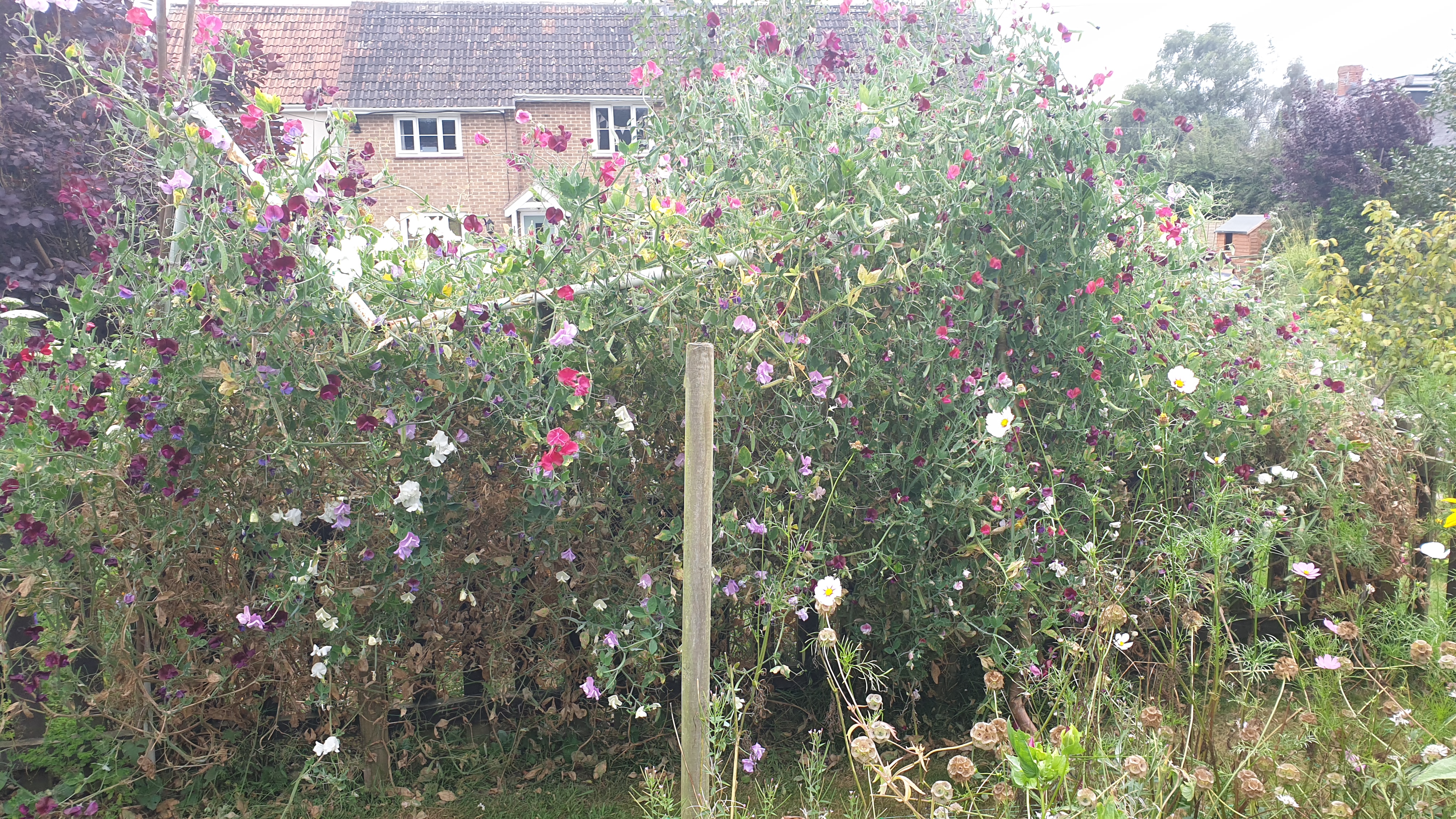
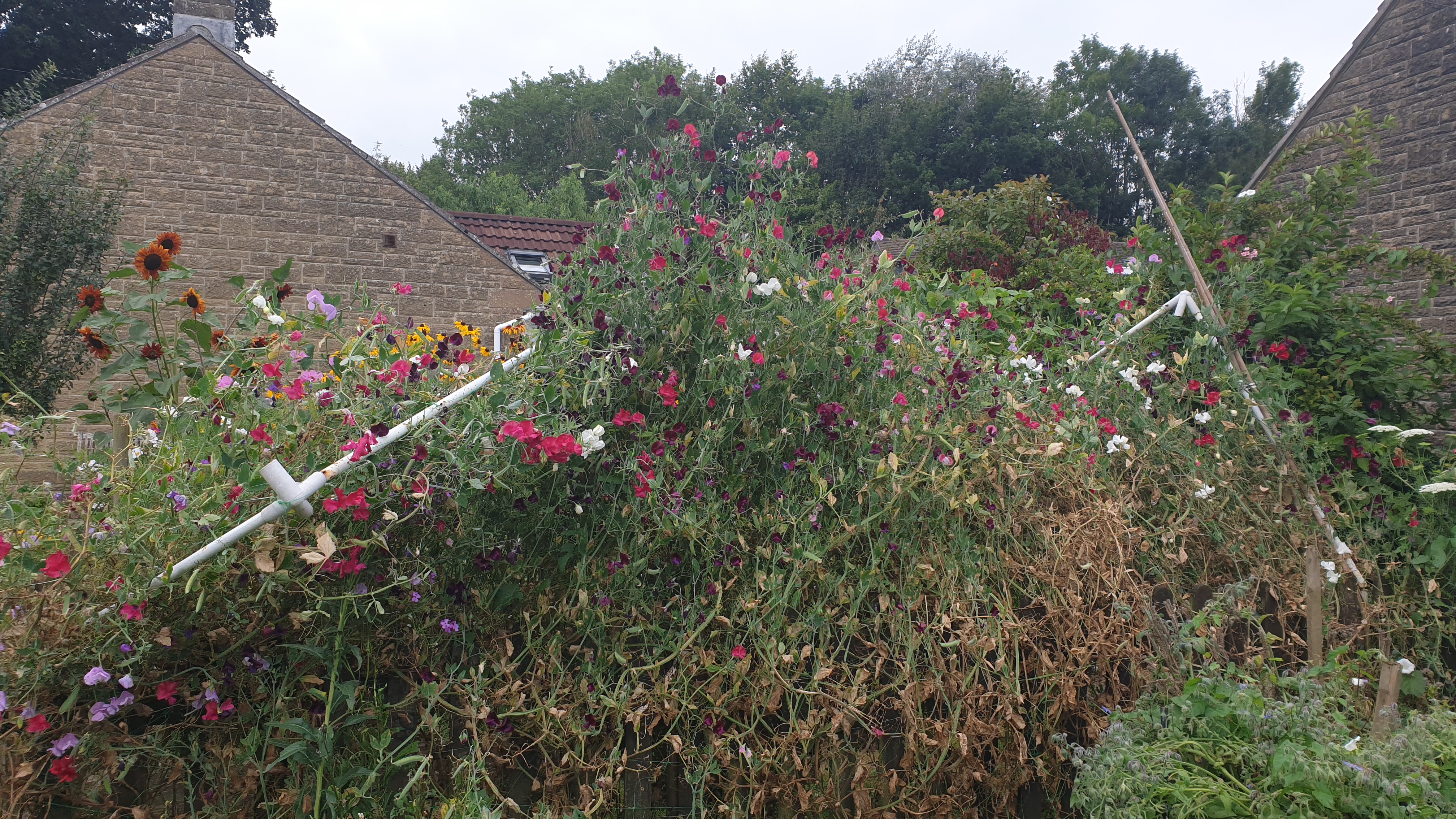
They have continued to crop heavily until just a week ago. So heavily, in fact, that the rectangular frame of old gazebo poles and green netting collapsed under the weigh and now resembles the Wembley goalposts of 1977 after celebratory Scottish fans invaded the pitch.
The results were good, but after the planning and the doing, we are now in the reviewing stage and need to plan to ensure even better performance next summer. Sterilising plant pots could reduce the chance of damping off and continuing to nip out the shoots undoubtedly helped the crop.
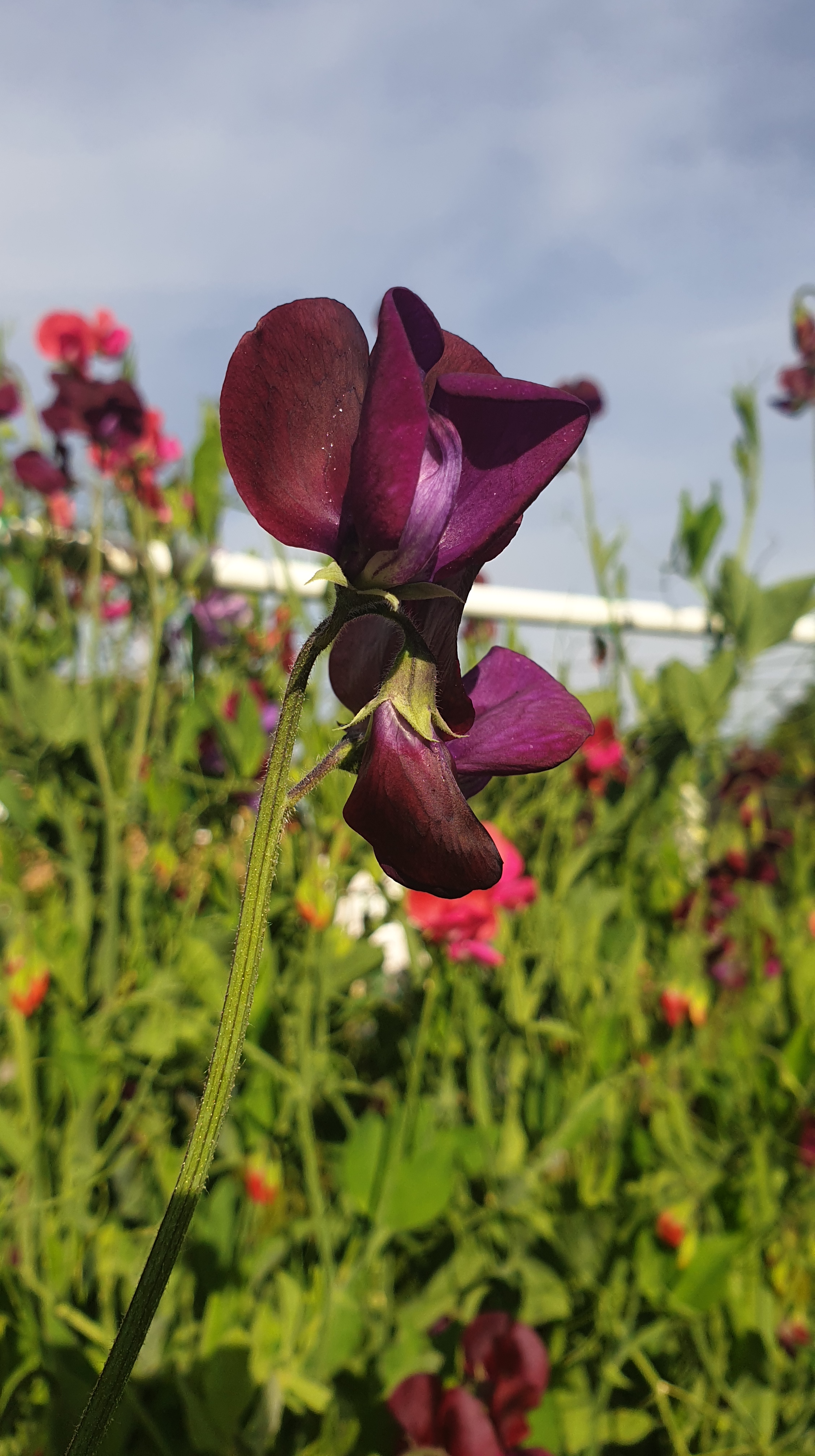
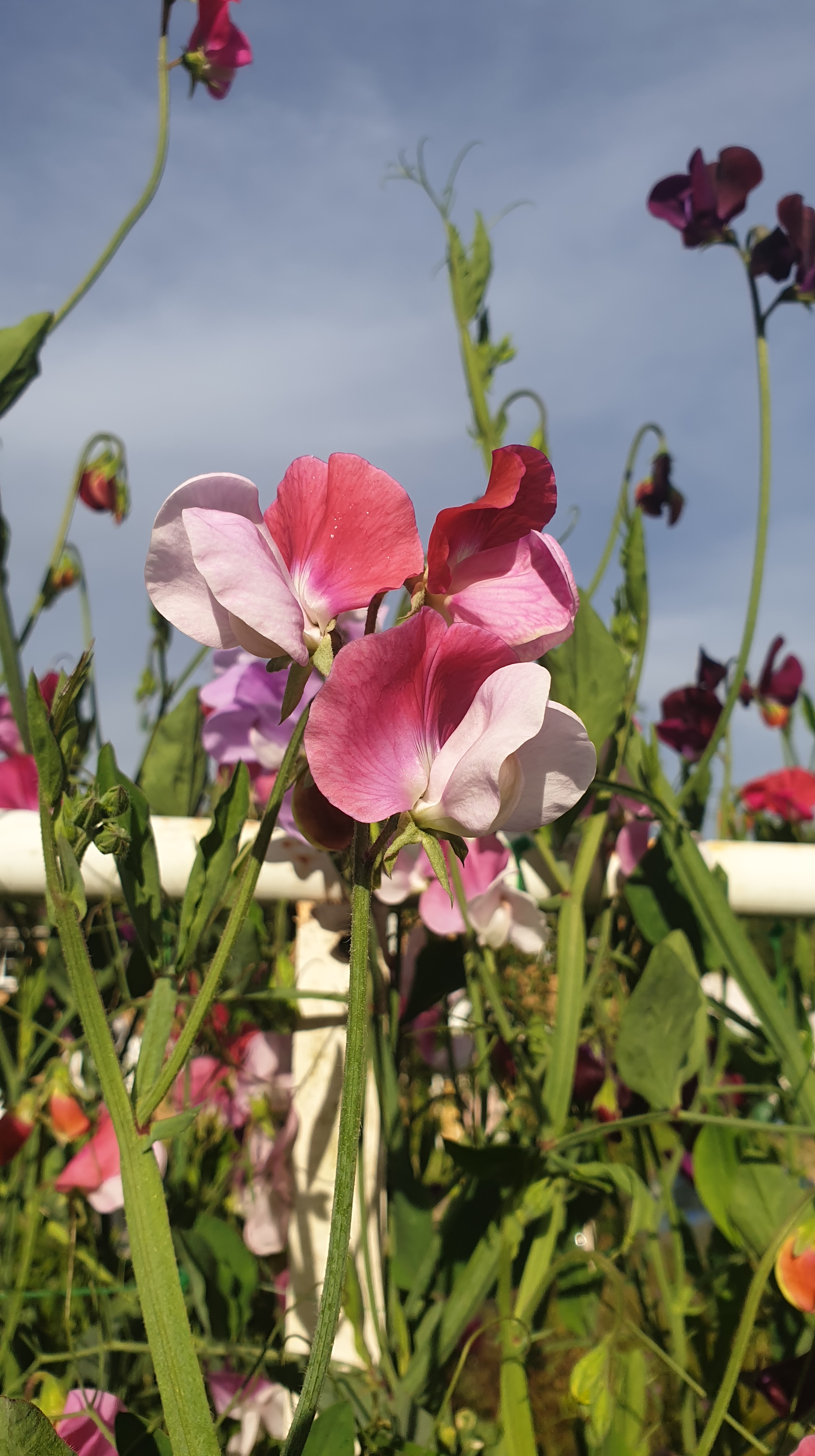
As to which varieties to grow, it is clear that some are better suited for cutting than others. We tried 13 different varieties from two different suppliers (Higgledy Garden & Premier Seeds Direct):
Heaven Scent Mix
Mammoth Scarlet
Parfume Millennium
Parfume White Supreme
Winston Churchill
Beaujolais
Leamington
Painted Lady
Cupani
Starry Night
Perfume Delight
Mammoth
Swan Lake
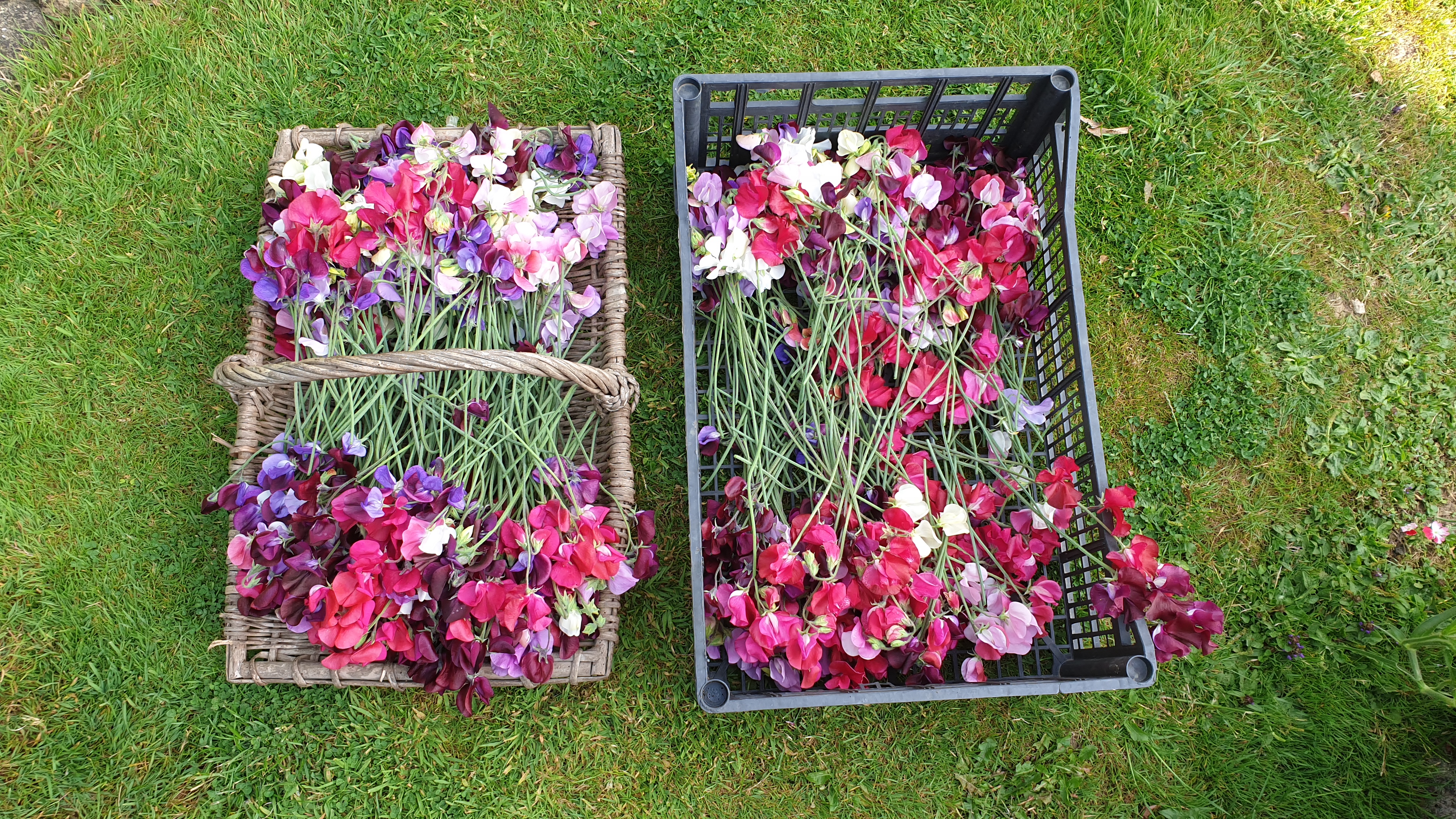
It is not easy deciding which to buy again. Success is not marked by sweet scent alone so, for example, although Cupani has a lovely aroma, it has short thin stems, while the Parfume white has wonderful long, strong stems, but is less scented. Ah, but which to choose? Perhaps we should decide it in the style of Harry Hill:
“FIGHT!!!”


 Midlife Gardener