A Song of Stone

My favourites
My favourites

Last weekend the sun came out.  Sunday was a day of rare dryness and brilliance.  For seemingly the first time this year we were able to get the wellies and dogs in the back of the car and take them for a good walk before I then went down the garden and did some constructive work. We decided to go up Cadbury Castle which is a better dog walk than it is a castle, if the image that such a name conjures is one of high ramparts, arrow slits, moats and portcullises.

The view south to Corton Ridge

When we first moved back to Somerset we were lucky enough to rent a cottage at the base of the path up, and it was not unusual to overhear a transatlantic accent pondering the inaccuracy of the term “castle” for what is essentially a large hill with a series of deep ditches running around it. Of course, this being an iron age castle, one should expect nothing more, though the popular myth that this was King Arthur’s Camelot helps add to its drawing power.  Geographically it is actually in South Cadbury, so at least part of the name is factually correct.

Another disappointingly named fortification is Castle Cary, where I took the dogs for a walk on Friday.  This is even less of a sight, amounting to basically no more than a couple of humps and hollows that represent what is left of the motte and bailey.  So the title to this post (another Iain Banks book title for those who might care) is, obviously, ironic.

Even without crenellations and ramparts, the views from Cadbury and Lodge Hill are brilliant, though the elevation does enable one to see all too clearly the massive grey shoe box of the pet food factory and, from Cadbury Castle these days, the Haynes Motor Museum is an increasingly garish scarlet sore thumb on the green Somerset countryside.

Shallow roots, he said

Rejuvenated after a dry, sunny walk, I set to in the garden. We decided over the summer to move the snake bark maple which the OM had planted next to the oil tank, into the main part of the garden.  In its current position it impedes parking space on the drive, so we decided to put it in the end of the boomerang bed.  And to do this I elected to remove the heather bed.  Taking the heather out is a doubly tough job.  On the one hand it is physically harder than the OM suggested  “Shallow roots” he said.  Yeah, maybe, but tangled together after thirty years of weaving in with trees and shrubs too, it takes a good few hours of hard labour.

All clear - only half a boomerang for now
All clear – only half a boomerang for now

Emotionally this was a tough ask too.  This is the heather which the kids found brilliant fun to run, rock and roll in.  And also get a good rollicking into the bargain.  Charlie and Josh still smile at the memory of the stern lecture they had from Grandpa after being caught flattening it.  And more recently Ella has burnt off a fair amount of puppy steam in the whiskery bed.  Heather always conjures memories for me of scottish holidays from my youth and also of visiting the wealthier cousins who had a massive heather bed in their large suburban garden.

But it’s gone now (leaving only memories?), along with a fair amount of bind weed roots, so that was a good thing.  Next up, digging the snake bark maple from next to the drive.  It is surrounded by gravel, chippings and tarmac.

So that WILL be a Song of Stone.

Raw Spirit

140107 (1)Although the prevailing conditions have  reduced our options when out with the dogs, walking the same lanes and fields does put one in touch with the natural rhythms of life in the neighbourhood and can cheer one up, whatever the weather.  There is always something to raise the spirits as even in the depths of a wet and blustery winter’s day, there are still glimpses of the bird life that is clinging on through the fallow months to bring a smile to your face.  Or maybe just a pair of idiot dogs will have you grinning.

Sodden Fields
Sodden Fields

On my walk the other day I could hear the plaintive mewing of a buzzard, as it flapped lazily overhead.  Later in the walk I was pleased to see the more urgent flight of a kestrel, as it emerged from a hedge on its sharp chiselled wings heading off across the field.  When I was growing up in this part of the world in the seventies, kestrels were the common bird of prey.  We seemed to have a resident kestrel that hunted along the lane, hovering on the prevailing westerlies, static above the verge.  Any motorway journey in those days would see kestrels at regular intervals along the embankments, but their numbers have declined over the intervening decades, unlike buzzards who are now the predominant Somerset raptors.

I remember it was a special journey to be driven five miles to see a buzzard that was nesting in some woods.  It was worth the trip just to see such a large bird of prey.  Now, we will often see up to half a dozen just standing in the field opposite.

Survival for the smaller birds is often dependent of them clubbing together.  So Ella was a little startled when she flushed a small flock of goldfinches.  They twittered away from her, working along the hedgerow.  Always good to see a few hedgerows – it is the decrease in these and other habitats that no doubt contributed to the reduction in the numbers of songbirds and our friend the Kestrel.

Ham Wall
Ham Wall

One bird that does not seem to have reduced greatly is the Starling.  On my walk in the morning I saw several small flocks flying purposefully eastwards over me.  And when I was walking in the late afternoon, I saw the same sight, in reverse, as they flew to their roosting spots over on the levels.  Last year we took a trip over to Ham Wall reserve to see the murmuration.  It was a beautiful winter’s evening, and although the starlings on this occasion decided to roost some way off, the constant, determined influx of small groups, or long straggling trails of them, was a sight to behold.  Roger Deakin (in “Notes from Walnut Tree Farm”) said that if you wanted a bird builder, he would choose the starling as it was so busy and hungry for life.

I know what he means as I see them flying here and there, or cackling in the blue cedar before they descend on the chicken food.  I can look at them and tell them “I know where you live”.  It doesn’t make much sense to them, but it makes me happy.

I like the fact that we can walk the lanes and see starlings going over and know where they come from or where they are going.  To have a feel for the present and the past of a place  satisfies an innate sense of belonging that we all desire to some degree and this corner of Somerset does it for me: the people, the places and the wildlife.


Puppy Dog Tales

Storm brewing
Storm brewing

We were woken again last night by the sound of rain clattering against our windows.  It has been a recurring theme this holiday: on New Year’s Eve we had proper hail – the size of a proverbial golf ball.  Actually, no: more the size of a marble, but exaggeration is all part of weather reportage, with floods being the worst on record, storms being the fiercest in living memory and rainfall that has seen animals queuing up two by two in the hope that someone would build a boat big enough to get them to safety.

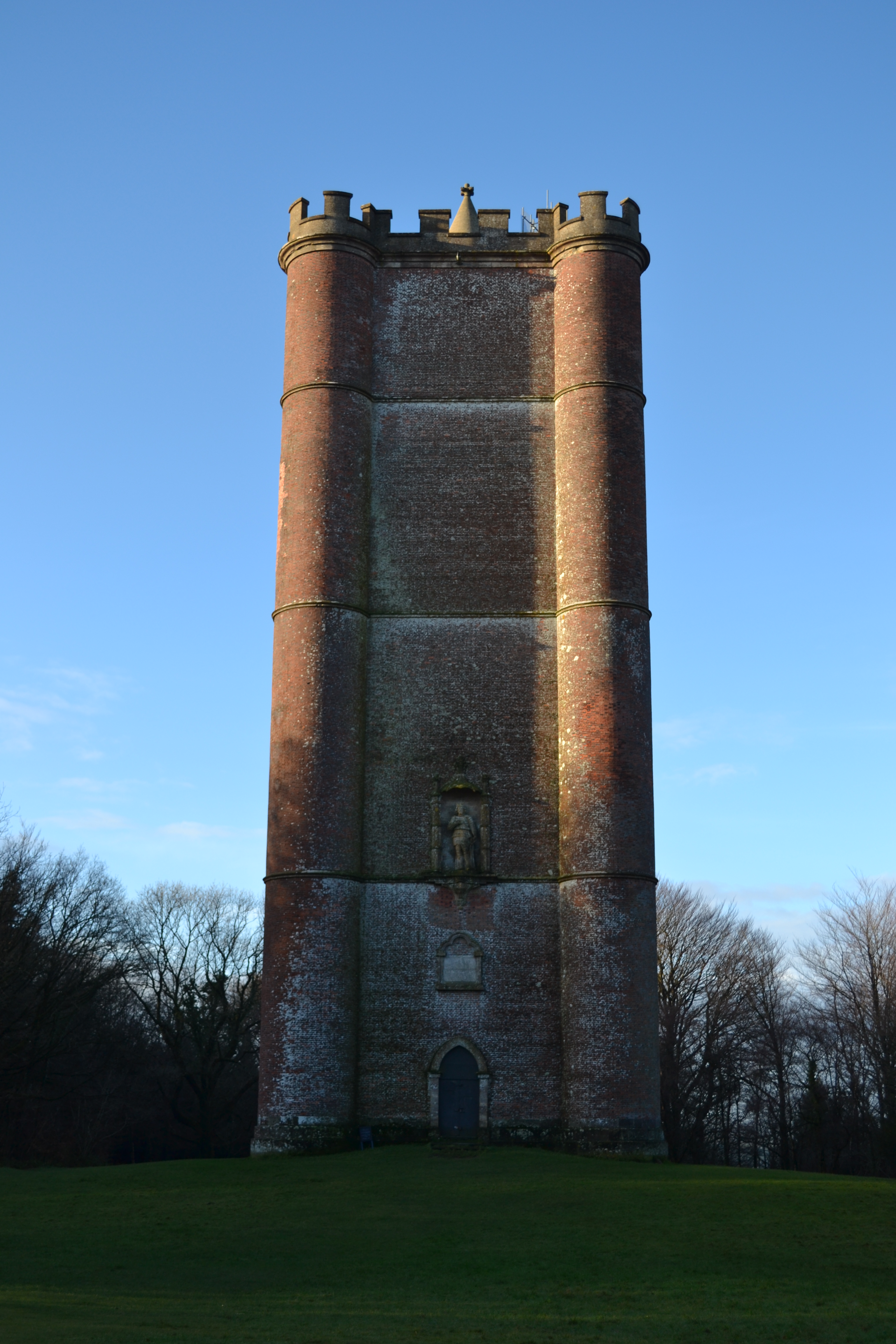
We haven’t yet had forty days and forty nights of this weather, but it feels like it.  So no point in even contemplating anything in the garden (apart from collecting the dog poo).  The sum total of our outside adventures has been to take the dogs for a walk each day.  A trip up to Alfred’s Tower the other morning was not exactly a runaway success, as the dogs got lost in the woods.  Fudge, despite appearances to the contrary,  has a decent sense of direction, but Ella is still a little naive on that front. So fifteen minutes’ walking, followed by ten minutes desperate calling saw the reappearance of a slightly bewildered lab/retriever cross.  We decided to call it a day and led dogs back to the car.

Red Sky in the Morning...
Red Sky in the Morning…

Our regular local walk has become an assault course to test dogs and owners.  Starting with a slide across sodden fields, one has to get past massive piles of horse manure, before wading through floods then avoiding the small field of pet sheep to get back to the lane.  There one dices with the constant flow of traffic from the equine fraternity who trundle along to attend to their liveried ponies and horses.  This would be fine, but Fudge has a vehement hatred of anything resembling a land rover or which might be a 4×4, so she needs to be closely monitored.

There used to be a track here

The horse shit is the first struggle, as both dogs see it as a free wayside snack, but not one that we are keen for them to feast on.  The flood is more of a challenge for all.  As a short-haired terrier who appears to have an allergy to water, Fudge is surprisingly chilled at plodding down the middle of the inundated lane, lifting her feet higher and higher as if running on tiptoe.  Ella, meanwhile, for a dog whose breeding heritage involves retrieving from water, shows a surprising aversion to the wet stuff.  She snakes her way through the hedge in order to avoid getting her feet damp.  And her distrust of water was only increased the other day when she decided to wade through the deluge, blissfully unaware that there was a three-foot ditch running alongside the lane.  Finding herself suddenly swimming, with only thick hedge in front of her, she did manage to execute an underwater turn – almost a tumble turn –  and get herself to the other, shallower, side of the lane.

But she has not been back in the water since.

Back at home, Ella is keen to demonstrate her retrieving instincts. So long as is doesn’t involve water.   She is constantly collecting slippers and shoes from around the house and proudly presenting them to us.  This is mostly harmless fun, but not when she has enough time to start picking over the said item.  On New Year’s day she reduced my slipper to its constituent parts over the course of a relaxing half hour when we were entertaining my brothers.

Alfred's Tower - with a distinct lack of dogs
Alfred’s Tower – with a distinct lack of dogs

But it is not all cosy domestic retrieval games.  Ella can produce the goods out in the wilds too (well, the garden).  One evening she and Fudge had been in garden, doing whatever they were supposed to do, when I opened the back door to see Ella chewing on the decapitated body of a rabbit.  I say decapitated advisedly, as the head of the rabbit was lying a few feet away from its corpse.  Ella seemed quite pleased with herself.  I bet Fudge wasn’t.  Whether or not the dogs had actually caught and killed the rabbit or just happened across its lifeless remains, I cannot say.  But I imagined a conversation between the two dogs going thus:

Fudge:  “Great, we can keep this out in the garden and snack on it whenever we are let out”

Ella: “Yeah, maybe.  But I really think we should take it back to our owners.  They will be so pleased with us”

Fudge: “but what about our morning and evening snacks?”

Ella: “I’m sure it’ll be fine.  I’m just gonna take this back to the house….”

I can’t repeat whatever Fudge thought of that idea.  But Ella got her way and the rabbit was duly disposed off (by me, over the fence).  But we’ll never know whose idea it was to chew the head off.